← Back
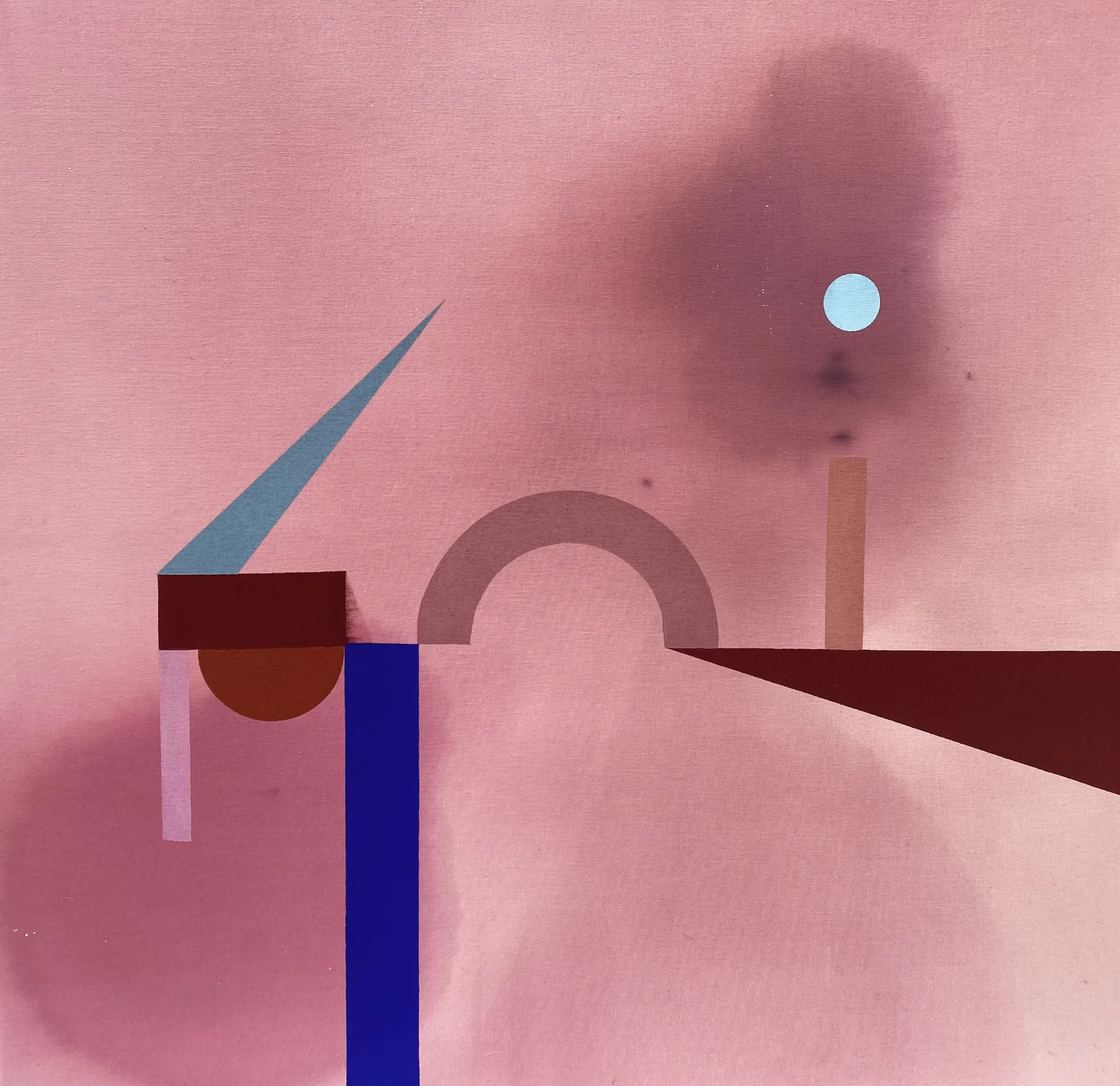
Calming Composition, View of Stralsund
Basia Bańda
ecoline and acrylic on canvas
70 × 70 cm, 2023
Film
Description of the painting
When I look at this painting, I see a city - houses, a church tower, a bridge, a river at noon. It feels hot. Stralsund is a large city surrounded by water, through which one travels to reach the island of Rügen. Above the city rises a huge structure - the longest bridge in Germany - which you can surely recognize in the painting.
Basia Bańda visited this place in the summer - she was resting there during her holiday, which is why she titled the painting “Calming Composition.”
Marta Gendera
Questions about the painting
Is it easy for you to keep your gaze and body in one place, or does the painting encourage you to move slowly through space?
How does your way of looking at the painting change when you stand close to it, and how does it change when you step farther away?
Choose your group ↓
Alone
(children/individual, approx. 6-7 years old)
Movement
build a shape
Stand in the middle of the room.
Imagine that your body is a structure from the painting.
Try to:
stand tall like a high tower,
stretch your arms like a bridge,
make an arch with your body.
Stay in each position for three calm breaths.
Which one feels most comfortable?Choose one and remain in it for a moment.
After the movement
Pause for a moment.
Notice your breath.
What remainsin your body?
Senses
hold the shape
Choose one shape from the previous exercise (tower, bridge, or arch).
Stand in that position.
Now notice:
is it easy to stay still,
does your body want to move,
do you need more space around you?
Take one step to the side.
Pause again.
Where does it feel calmer?
Image
building a calm city
Use: building blocks or small objects from home (for example: books, boxes, cups, wooden pieces).
Build a city from them.
Try to:
place something tall like a tower,
arrange something horizontally like a bridge,
create an arch or a passage.
Look at your construction up close.
Then step a few steps back.
Notice:
is something too close,
does something need more space?
Move the elements until you feel that the arrangement is calm.
At the end, choose one element and try to show it with your body.
Alone
(children/individual, approx. 6-7 years old)
Movement
build a shape
Stand in the middle of the room.
Imagine that your body is a structure from the painting.
Try to:
stand tall like a high tower,
stretch your arms like a bridge,
make an arch with your body.
Stay in each position for three calm breaths.
Which one feels most comfortable?Choose one and remain in it for a moment.
After the movement
Pause for a moment.
Notice your breath.
What remainsin your body?
Senses
hold the shape
Choose one shape from the previous exercise (tower, bridge, or arch).
Stand in that position.
Now notice:
is it easy to stay still,
does your body want to move,
do you need more space around you?
Take one step to the side.
Pause again.
Where does it feel calmer?
Image
building a calm city
Use: building blocks or small objects from home (for example: books, boxes, cups, wooden pieces).
Build a city from them.
Try to:
place something tall like a tower,
arrange something horizontally like a bridge,
create an arch or a passage.
Look at your construction up close.
Then step a few steps back.
Notice:
is something too close,
does something need more space?
Move the elements until you feel that the arrangement is calm.
At the end, choose one element and try to show it with your body.
Alone
(children/individual, approx. 6-7 years old)
Movement
build a shape
Stand in the middle of the room.
Imagine that your body is a structure from the painting.
Try to:
stand tall like a high tower,
stretch your arms like a bridge,
make an arch with your body.
Stay in each position for three calm breaths.
Which one feels most comfortable?Choose one and remain in it for a moment.
After the movement
Pause for a moment.
Notice your breath.
What remainsin your body?
Senses
hold the shape
Choose one shape from the previous exercise (tower, bridge, or arch).
Stand in that position.
Now notice:
is it easy to stay still,
does your body want to move,
do you need more space around you?
Take one step to the side.
Pause again.
Where does it feel calmer?
Image
building a calm city
Use: building blocks or small objects from home (for example: books, boxes, cups, wooden pieces).
Build a city from them.
Try to:
place something tall like a tower,
arrange something horizontally like a bridge,
create an arch or a passage.
Look at your construction up close.
Then step a few steps back.
Notice:
is something too close,
does something need more space?
Move the elements until you feel that the arrangement is calm.
At the end, choose one element and try to show it with your body.
Together
(family/caregiver + child aged 4-6)
Movement
building a bridge
Stand facing each other.
The parent or caregiver creates a “bridge” with their body -stretching their arms out to the sidesor forming an arch above the head.
Pause.
Switch roles.
At the end, stand next to each other like two towers.
After the movement
Look at each other.
Do you feel closer or the same?
When did it feel good in your bodies?
Senses
a lot of space - little space
Stand very close to each other.
Does it feel comfortable?
Now take two big steps backward.
Does it feel calmer?
Try to find a distance where both of you feel good.
Pause there for a moment.
Image
small city
Use: a few objects from home (a cup, a book, a block, etc.).
UArrange them like a small city.
Move the elements very slowly.
Pause when the arrangement feels calm.
You may stand next to your construction and try to be as calm as it is.
Together
(family/caregiver + child aged 4-6)
Movement
building a bridge
Stand facing each other.
The parent or caregiver creates a “bridge” with their body -stretching their arms out to the sidesor forming an arch above the head.
Pause.
Switch roles.
At the end, stand next to each other like two towers.
After the movement
Look at each other.
Do you feel closer or the same?
When did it feel good in your bodies?
Senses
a lot of space - little space
Stand very close to each other.
Does it feel comfortable?
Now take two big steps backward.
Does it feel calmer?
Try to find a distance where both of you feel good.
Pause there for a moment.
Image
small city
Use: a few objects from home (a cup, a book, a block, etc.).
UArrange them like a small city.
Move the elements very slowly.
Pause when the arrangement feels calm.
You may stand next to your construction and try to be as calm as it is.
In a group
(educational activities/workshops for children aged 7-11)
Movement
living composition
Divide the participants into groups of four.
In each group:
three people build the composition,
one person observes.
The three builders each choose one shape: vertical (tower), horizontal (bridge), or arch. They position themselves in the space and remain still, creating a shared “architecture.”
The observing person watches from the side.
They may say what in the composition appears calm.
After a moment, roles change.
The observer switches with one person from the composition, so that everyone has a chance to look from the outside.
After the movement
You may remain still for a moment.Notice your breath. Notice what stayed in your body.
How much space around you do you need to feel the calm coming from this composition?
What point of view feels most calming to you? What shape does your body take then?
Do you see silence in the painting?
Guide to the experience - how to “respond” to the questions
Question: Do you see silence in the painting?
Response: Silence appears in the moment of stillness. It is the moment when the body stops adjusting itself and simply exists in the space.
Senses
the city wakes up and falls asleep
One person begins with a very quiet, simple sound (for example, “mmm,” “shhh,” or gentle finger tapping).
After a moment, a second person joins. Their sound is calm and repetitive.
More participants gradually join in until the whole group creates a “city” made of sounds.
Listen to one another. Do not drown out others.
At a certain moment, the group decides together that the city begins to fall asleep.
One by one, participants soften and fade their sounds, listening to what is still present.In the end, silence remains.
Stay in it for a while.
Image
spatial plan
Use: a large sheet of paper, paint, or oil pastels.
The group paints a landscape:
a bridge,
a tower,
a river,
open space.
Each person adds one element.
At the end, the group arranges themselves in the room according to the elements in the drawing.
In a group
(educational activities/workshops for children aged 7-11)
Movement
living composition
Divide the participants into groups of four.
In each group:
three people build the composition,
one person observes.
The three builders each choose one shape: vertical (tower), horizontal (bridge), or arch. They position themselves in the space and remain still, creating a shared “architecture.”
The observing person watches from the side.
They may say what in the composition appears calm.
After a moment, roles change.
The observer switches with one person from the composition, so that everyone has a chance to look from the outside.
After the movement
You may remain still for a moment.Notice your breath. Notice what stayed in your body.
How much space around you do you need to feel the calm coming from this composition?
What point of view feels most calming to you? What shape does your body take then?
Do you see silence in the painting?
Guide to the experience - how to “respond” to the questions
Question: Do you see silence in the painting?
Response: Silence appears in the moment of stillness. It is the moment when the body stops adjusting itself and simply exists in the space.
Senses
the city wakes up and falls asleep
One person begins with a very quiet, simple sound (for example, “mmm,” “shhh,” or gentle finger tapping).
After a moment, a second person joins. Their sound is calm and repetitive.
More participants gradually join in until the whole group creates a “city” made of sounds.
Listen to one another. Do not drown out others.
At a certain moment, the group decides together that the city begins to fall asleep.
One by one, participants soften and fade their sounds, listening to what is still present.In the end, silence remains.
Stay in it for a while.
Image
spatial plan
Use: a large sheet of paper, paint, or oil pastels.
The group paints a landscape:
a bridge,
a tower,
a river,
open space.
Each person adds one element.
At the end, the group arranges themselves in the room according to the elements in the drawing.
In a group
(educational activities/workshops for children aged 7-11)
Movement
living composition
Divide the participants into groups of four.
In each group:
three people build the composition,
one person observes.
The three builders each choose one shape: vertical (tower), horizontal (bridge), or arch. They position themselves in the space and remain still, creating a shared “architecture.”
The observing person watches from the side.
They may say what in the composition appears calm.
After a moment, roles change.
The observer switches with one person from the composition, so that everyone has a chance to look from the outside.
After the movement
You may remain still for a moment.Notice your breath. Notice what stayed in your body.
How much space around you do you need to feel the calm coming from this composition?
What point of view feels most calming to you? What shape does your body take then?
Do you see silence in the painting?
Guide to the experience - how to “respond” to the questions
Question: Do you see silence in the painting?
Response: Silence appears in the moment of stillness. It is the moment when the body stops adjusting itself and simply exists in the space.
Senses
the city wakes up and falls asleep
One person begins with a very quiet, simple sound (for example, “mmm,” “shhh,” or gentle finger tapping).
After a moment, a second person joins. Their sound is calm and repetitive.
More participants gradually join in until the whole group creates a “city” made of sounds.
Listen to one another. Do not drown out others.
At a certain moment, the group decides together that the city begins to fall asleep.
One by one, participants soften and fade their sounds, listening to what is still present.In the end, silence remains.
Stay in it for a while.
Image
spatial plan
Use: a large sheet of paper, paint, or oil pastels.
The group paints a landscape:
a bridge,
a tower,
a river,
open space.
Each person adds one element.
At the end, the group arranges themselves in the room according to the elements in the drawing.