← Back
In the water
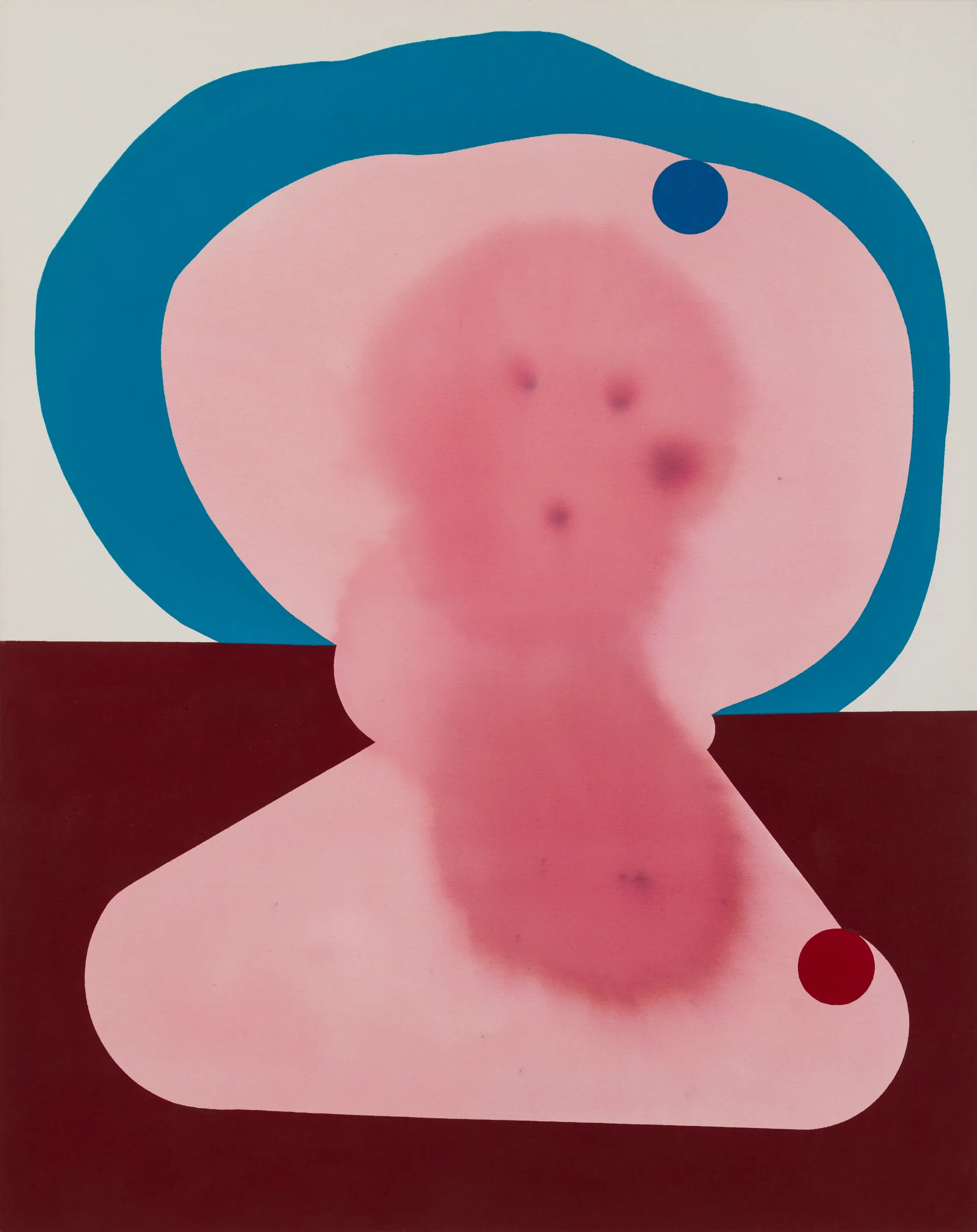
Basia Bańda
ecoline and acrylic on canvas
140 × 110 cm, 2022
Film
Description of the painting
For a long time, I wondered where the water is in this painting. It would probably be easy to mistake the bottom for the top when hanging it on a wall. Or perhaps it is a large air bubble rising from beneath the surface when we exhale underwater?
I also think about two small spheres moving inside this bubble - will they meet, collide, and cause it to burst?
Marta Gendera
Questions about the painting
How deep is this water - does it reach your ankles, or does it rise above your head?
Is the water in the painting dense and resistant, or light and fluid?
Choose your group ↓
Alone
(children/individual, approx. 6-7 years old)
Movement
body in the water
Imagine that your body is sinking into the water up to your neck.
Move very slowly:
your arms move with resistance,
your torso sways like a wave,
your legs take small, careful steps.
Pause for a moment.
Check whether it is easy or difficult to move in this water.
drift
Lie down on the floor or stay very low to the ground.
Imagine that your body is floating on the surface of the water:
first, allow yourself to relax,
then make very small micro-movements, like gentle waves,
finally, slowly shift your weight from side to side.
After the movement
Pause for a moment.
Notice your breath.
What stayed in your body?
Senses
hands through water
Close your eyes.Touch different surfaces with your hands: wet, cold, smooth, slippery.
Notice which “water” feels pleasant and which feels more difficult.
Each surface “tells” a different kind of water: cold, deep, shallow, calm, or turbulent.
Try to move as if your hands were in that water.
Image
line of a wave
Use: a sheet of paper (preferably a larger one attached to a wall or placed on the floor), ink, watercolor, or oil pastels.
Draw one long line.
Do not lift your hand from the paper.
Let the line wave, sink, and rise.
Then try to dance the line you have drawn.
Alone
(children/individual, approx. 6-7 years old)
Movement
body in the water
Imagine that your body is sinking into the water up to your neck.
Move very slowly:
your arms move with resistance,
your torso sways like a wave,
your legs take small, careful steps.
Pause for a moment.
Check whether it is easy or difficult to move in this water.
drift
Lie down on the floor or stay very low to the ground.
Imagine that your body is floating on the surface of the water:
first, allow yourself to relax,
then make very small micro-movements, like gentle waves,
finally, slowly shift your weight from side to side.
After the movement
Pause for a moment.
Notice your breath.
What stayed in your body?
Senses
hands through water
Close your eyes.Touch different surfaces with your hands: wet, cold, smooth, slippery.
Notice which “water” feels pleasant and which feels more difficult.
Each surface “tells” a different kind of water: cold, deep, shallow, calm, or turbulent.
Try to move as if your hands were in that water.
Image
line of a wave
Use: a sheet of paper (preferably a larger one attached to a wall or placed on the floor), ink, watercolor, or oil pastels.
Draw one long line.
Do not lift your hand from the paper.
Let the line wave, sink, and rise.
Then try to dance the line you have drawn.
Alone
(children/individual, approx. 6-7 years old)
Movement
body in the water
Imagine that your body is sinking into the water up to your neck.
Move very slowly:
your arms move with resistance,
your torso sways like a wave,
your legs take small, careful steps.
Pause for a moment.
Check whether it is easy or difficult to move in this water.
drift
Lie down on the floor or stay very low to the ground.
Imagine that your body is floating on the surface of the water:
first, allow yourself to relax,
then make very small micro-movements, like gentle waves,
finally, slowly shift your weight from side to side.
After the movement
Pause for a moment.
Notice your breath.
What stayed in your body?
Senses
hands through water
Close your eyes.Touch different surfaces with your hands: wet, cold, smooth, slippery.
Notice which “water” feels pleasant and which feels more difficult.
Each surface “tells” a different kind of water: cold, deep, shallow, calm, or turbulent.
Try to move as if your hands were in that water.
Image
line of a wave
Use: a sheet of paper (preferably a larger one attached to a wall or placed on the floor), ink, watercolor, or oil pastels.
Draw one long line.
Do not lift your hand from the paper.
Let the line wave, sink, and rise.
Then try to dance the line you have drawn.
Together
(family/caregiver + child aged 4-6)
Movement
shared drift
Stand next to each other.
Imagine that you are in the same water.
Move very slowly, at the same pace.
Notice when it is easier to synchronize and when it is more difficult.
If you wish:
one person leads the movement, the other follows,
then switch roles.
After the movement
Look at each other.
Do you feel closer or the same?
When did it feel good in your bodies?
Senses
water between us
Use: a light piece of fabric (a scarf, a thin blanket, or foil).
Move it together as if it were water.
Notice:
when the material creates resistance,
when it flows lightly.
Try moving your bodies the way the material moves.
Image
immersion of color
Use: sheets of paper, water-based paints (watercolor or diluted poster paint), a brush, and a cup of water.
Dilute the paint with water.
Let the color spread across the paper on its own.
Add more layers without fully controlling the result.
Once it dries, try to find shapes within the color stains.
Choose one and bring it to life through movement.
Together
(family/caregiver + child aged 4-6)
Movement
shared drift
Stand next to each other.
Imagine that you are in the same water.
Move very slowly, at the same pace.
Notice when it is easier to synchronize and when it is more difficult.
If you wish:
one person leads the movement, the other follows,
then switch roles.
After the movement
Look at each other.
Do you feel closer or the same?
When did it feel good in your bodies?
Senses
water between us
Use: a light piece of fabric (a scarf, a thin blanket, or foil).
Move it together as if it were water.
Notice:
when the material creates resistance,
when it flows lightly.
Try moving your bodies the way the material moves.
Image
immersion of color
Use: sheets of paper, water-based paints (watercolor or diluted poster paint), a brush, and a cup of water.
Dilute the paint with water.
Let the color spread across the paper on its own.
Add more layers without fully controlling the result.
Once it dries, try to find shapes within the color stains.
Choose one and bring it to life through movement.
Together
(family/caregiver + child aged 4-6)
Movement
shared drift
Stand next to each other.
Imagine that you are in the same water.
Move very slowly, at the same pace.
Notice when it is easier to synchronize and when it is more difficult.
If you wish:
one person leads the movement, the other follows,
then switch roles.
After the movement
Look at each other.
Do you feel closer or the same?
When did it feel good in your bodies?
Senses
water between us
Use: a light piece of fabric (a scarf, a thin blanket, or foil).
Move it together as if it were water.
Notice:
when the material creates resistance,
when it flows lightly.
Try moving your bodies the way the material moves.
Image
immersion of color
Use: sheets of paper, water-based paints (watercolor or diluted poster paint), a brush, and a cup of water.
Dilute the paint with water.
Let the color spread across the paper on its own.
Add more layers without fully controlling the result.
Once it dries, try to find shapes within the color stains.
Choose one and bring it to life through movement.
In a group
(educational activities/workshops for children aged 7-11)
Movement
immersion
Invite participants to move very slowly around the room.
Ask them to imagine that the air is dense like water.
The movement becomes heavier, slower, and continuous.
Arms move as if cutting through water. The step is soft and careful.
From time to time, bring the group to stillness. Notice how the body “settles.”
If two participants meet in the space, they may move together at the same pace for a moment, and then drift apart again.
After the movement
You may remain still for a moment.Notice your breath. Notice what stayed in your body.
How does your body change when you imagine that it is submerged?
What color is your inner water?
Do you associate water with safety or with the unknown?
Guide to the experience - how to respond to the questions
Question: What color is your inner water?
Response: It may appear as the choice of a specific prop (for example, a scarf) or as a movement with a particular dynamic (for example, turbulent waves versus a calm drift).
Question: Do you associate water with safety or with the unknown?
Response: It becomes visible in muscle tension. A body that resists may suggest the “unknown,” while a relaxed body in a drifting movement may suggest acceptance and safety.
Senses
loss of balance
Participants stand freely in the space.
Ask them to imagine that the floor beneath their feet begins to move gently - like water.
The body:
sways slightly,
loses balance and regains it,
continuously searches for new support.
Encourage very slow reactions.
The movement is not sudden - it is a response.
If you wish:
invite participants to close their eyes for a few seconds,
draw attention to the feet, knees, and hips.
Image
color of water
Use: sheets of paper, oil pastels, or paint.
Each person chooses the color of their water.
On the paper, they create a simple form: a shape, a line, or a circle.
At the end, the group moves among the images.
Each person may pause for a moment by a chosen color and respond to it through movement.
In a group
(educational activities/workshops for children aged 7-11)
Movement
immersion
Invite participants to move very slowly around the room.
Ask them to imagine that the air is dense like water.
The movement becomes heavier, slower, and continuous.
Arms move as if cutting through water. The step is soft and careful.
From time to time, bring the group to stillness. Notice how the body “settles.”
If two participants meet in the space, they may move together at the same pace for a moment, and then drift apart again.
After the movement
You may remain still for a moment.Notice your breath. Notice what stayed in your body.
How does your body change when you imagine that it is submerged?
What color is your inner water?
Do you associate water with safety or with the unknown?
Guide to the experience - how to respond to the questions
Question: What color is your inner water?
Response: It may appear as the choice of a specific prop (for example, a scarf) or as a movement with a particular dynamic (for example, turbulent waves versus a calm drift).
Question: Do you associate water with safety or with the unknown?
Response: It becomes visible in muscle tension. A body that resists may suggest the “unknown,” while a relaxed body in a drifting movement may suggest acceptance and safety.
Senses
loss of balance
Participants stand freely in the space.
Ask them to imagine that the floor beneath their feet begins to move gently - like water.
The body:
sways slightly,
loses balance and regains it,
continuously searches for new support.
Encourage very slow reactions.
The movement is not sudden - it is a response.
If you wish:
invite participants to close their eyes for a few seconds,
draw attention to the feet, knees, and hips.
Image
color of water
Use: sheets of paper, oil pastels, or paint.
Each person chooses the color of their water.
On the paper, they create a simple form: a shape, a line, or a circle.
At the end, the group moves among the images.
Each person may pause for a moment by a chosen color and respond to it through movement.
In a group
(educational activities/workshops for children aged 7-11)
Movement
immersion
Invite participants to move very slowly around the room.
Ask them to imagine that the air is dense like water.
The movement becomes heavier, slower, and continuous.
Arms move as if cutting through water. The step is soft and careful.
From time to time, bring the group to stillness. Notice how the body “settles.”
If two participants meet in the space, they may move together at the same pace for a moment, and then drift apart again.
After the movement
You may remain still for a moment.Notice your breath. Notice what stayed in your body.
How does your body change when you imagine that it is submerged?
What color is your inner water?
Do you associate water with safety or with the unknown?
Guide to the experience - how to respond to the questions
Question: What color is your inner water?
Response: It may appear as the choice of a specific prop (for example, a scarf) or as a movement with a particular dynamic (for example, turbulent waves versus a calm drift).
Question: Do you associate water with safety or with the unknown?
Response: It becomes visible in muscle tension. A body that resists may suggest the “unknown,” while a relaxed body in a drifting movement may suggest acceptance and safety.
Senses
loss of balance
Participants stand freely in the space.
Ask them to imagine that the floor beneath their feet begins to move gently - like water.
The body:
sways slightly,
loses balance and regains it,
continuously searches for new support.
Encourage very slow reactions.
The movement is not sudden - it is a response.
If you wish:
invite participants to close their eyes for a few seconds,
draw attention to the feet, knees, and hips.
Image
color of water
Use: sheets of paper, oil pastels, or paint.
Each person chooses the color of their water.
On the paper, they create a simple form: a shape, a line, or a circle.
At the end, the group moves among the images.
Each person may pause for a moment by a chosen color and respond to it through movement.