Table of Contents
01
DO THE WORK! - interpretations of artworks through movement
An educational and artistic project inviting children and adults to experience paintings through movement, the body, and the senses.
DO THE WORK! means action, but also an encounter with a work of art.In this project, both meanings come together.
DO THE WORK! is an invitation to look with the whole body.
To move together with the painting.
To listen to what the image activates in the body before words appear.
Children naturally experience art through movement - through gesture, rhythm, tension, and emotion. Movement interpretations of paintings are not illustrations or reenactments of the artwork, but the body’s response to what is visible.
The films created as part of the DO THE WORK! project show that a painting does not have to remain static - it can breathe, shift tempo, and invite shared action.
DO THE WORK! - interpretations of artworks through movement
An educational and artistic project inviting children and adults to experience paintings through movement, the body, and the senses.
DO THE WORK! means action, but also an encounter with a work of art.In this project, both meanings come together.
DO THE WORK! is an invitation to look with the whole body.
To move together with the painting.
To listen to what the image activates in the body before words appear.
Children naturally experience art through movement - through gesture, rhythm, tension, and emotion. Movement interpretations of paintings are not illustrations or reenactments of the artwork, but the body’s response to what is visible.
The films created as part of the DO THE WORK! project show that a painting does not have to remain static - it can breathe, shift tempo, and invite shared action.
02
How to use this brochure
This brochure has been designed as a flexible tool that can be used regardless of experience level, age, or the place in which you find yourself.
The films created within the project have a raw, minimalist form. They do not guide emotions or impose interpretation - they leave space for one’s own tempo, breath, and personal experience of movement.
Alone (children):
You do not need to know or understand anything. Treat movement as a way of checking how your body feels in the present moment.
Together (families with children):
ou do not need to do everything - one film or one shared moment of movement is enough. Your attentiveness, curiosity, and closeness are more important than the “correctness” of gestures.
In a Group (groups and educators):
The facilitator’s role is not to demonstrate the “right” movement, but to create a safe framework for experience. Remember that every participant’s gesture is a valid and legitimate response to art.
You may invite music into the exercises. It does not have to be a specific piece - look for sounds that resonate with the quality of the painting. Remember that silence is equally important and allows you to better hear the signals coming from your body.
Educational Dimension
The project DO THE WORK! is based on the assumption that experiencing art is an embodied process. Before a child names what they see, their body responds - with tension, emotion, and an impulse to act.
In line with the ideas of Rudolf Laban and Maxine Sheets-Johnstone, movement is understood as a primary way of making sense of reality, one that naturally precedes words. Allowing a child to move in front of a painting enables them to build an authentic relationship with art through their own language.
Working with the body deepens contact with the artwork without fear of a “wrong answer.” Movement becomes an individual way of sensing and narrating art, opening space for free expression.
The project connects the world of visual art with movement, forming a foundation for the holistic development of the child. It is precisely this inseparable connection between image and movement experience that allows for a comprehensive engagement with reality - through the senses, emotions, and the body. As John Dewey wrote: “A work of art lives only when it becomes part of actual experience.”
General questions about the paintings
If this painting could move, what kind of movement would it have?
Is it heavy or light? Fast or slow?
What temperature does it have?
General questions about the films
What in this movement reminds you of the painting?
How does your body change when you look at it?
With what gesture would you respond to this movement?
In the films, Intibag objects designed by Tomasz Bergman were used as elements supporting work with weight and the body’s relationship to space.
How to use this brochure
This brochure has been designed as a flexible tool that can be used regardless of experience level, age, or the place in which you find yourself.
The films created within the project have a raw, minimalist form. They do not guide emotions or impose interpretation - they leave space for one’s own tempo, breath, and personal experience of movement.
Alone (children):
You do not need to know or understand anything. Treat movement as a way of checking how your body feels in the present moment.
Together (families with children):
ou do not need to do everything - one film or one shared moment of movement is enough. Your attentiveness, curiosity, and closeness are more important than the “correctness” of gestures.
In a Group (groups and educators):
The facilitator’s role is not to demonstrate the “right” movement, but to create a safe framework for experience. Remember that every participant’s gesture is a valid and legitimate response to art.
You may invite music into the exercises. It does not have to be a specific piece - look for sounds that resonate with the quality of the painting. Remember that silence is equally important and allows you to better hear the signals coming from your body.
Educational Dimension
The project DO THE WORK! is based on the assumption that experiencing art is an embodied process. Before a child names what they see, their body responds - with tension, emotion, and an impulse to act.
In line with the ideas of Rudolf Laban and Maxine Sheets-Johnstone, movement is understood as a primary way of making sense of reality, one that naturally precedes words. Allowing a child to move in front of a painting enables them to build an authentic relationship with art through their own language.
Working with the body deepens contact with the artwork without fear of a “wrong answer.” Movement becomes an individual way of sensing and narrating art, opening space for free expression.
The project connects the world of visual art with movement, forming a foundation for the holistic development of the child. It is precisely this inseparable connection between image and movement experience that allows for a comprehensive engagement with reality - through the senses, emotions, and the body. As John Dewey wrote: “A work of art lives only when it becomes part of actual experience.”
General questions about the paintings
If this painting could move, what kind of movement would it have?
Is it heavy or light? Fast or slow?
What temperature does it have?
General questions about the films
What in this movement reminds you of the painting?
How does your body change when you look at it?
With what gesture would you respond to this movement?
In the films, Intibag objects designed by Tomasz Bergman were used as elements supporting work with weight and the body’s relationship to space.
03
Manifesto of young art viewers
My body in encounter with art
I see not only with my eyes
I invite my hands, feet, back, and breath to meet the painting.
My body thinks
The movement I feel while looking at the artwork is my own story about art.
I do not have to understand anything
What matters most is what I feel and how the image affects me in this particular moment.
I can move
In this space, my movement is as important as silence. I can drift, remain still, or search for my own gesture.
I creatively connect
I am not looking for “correct answers” - I am looking for an encounter with the artwork that helps me feel myself more clearly.
Manifesto of young art viewers
My body in encounter with art
I see not only with my eyes
I invite my hands, feet, back, and breath to meet the painting.
My body thinks
The movement I feel while looking at the artwork is my own story about art.
I do not have to understand anything
What matters most is what I feel and how the image affects me in this particular moment.
I can move
In this space, my movement is as important as silence. I can drift, remain still, or search for my own gesture.
I creatively connect
I am not looking for “correct answers” - I am looking for an encounter with the artwork that helps me feel myself more clearly.
04
Basia Bańda’s artistic practice as a starting point
The starting point of the project DO THE WORK! is the artistic practice of Basia Bańda, which becomes an impulse for embodied engagement with art through movement, emotion, and the senses. Her abstract paintings are not treated as static objects, but as living experiences that activate specific tensions, rhythms, and gestures in the body before they are named in words.
As Ryszard Woźniak observes, the artist’s work can be understood as “an affirmation of all aspects of existence.” The energy of the psychological states she experiences becomes material for constructing compositions that describe emotions and conditions shared by all of us. Bańda remains faithful to her own sensitivity and to what Woźniak calls “the only available truth - the truth of personal sensations and experiences.” This resonates with the idea of the project, which invites each viewer to search for their own authentic response within the painting.
A key element of this painterly narrative is the color pink - described by Ewa Łączyńska as a intimate and safe body color. In the DO THE WORK! project, this sense of corporeality becomes a starting point for exploring closeness and grounding. The synesthetic quality present in Bańda’s paintings, as described by Marta Lisak, finds a direct translation into movement - vision intertwines with touch, and color becomes a kinesthetic impulse, inviting us to “look with the whole body.”
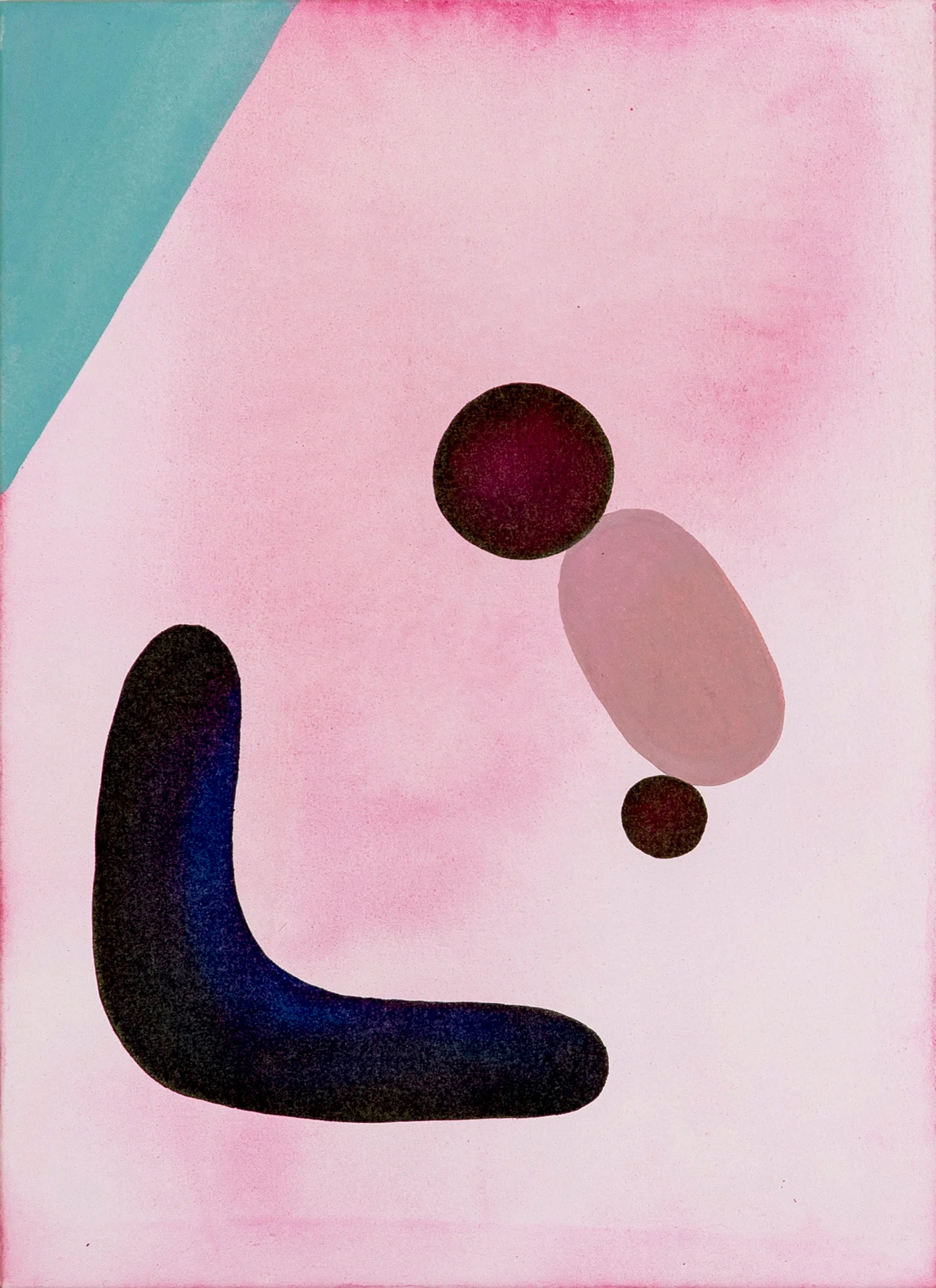
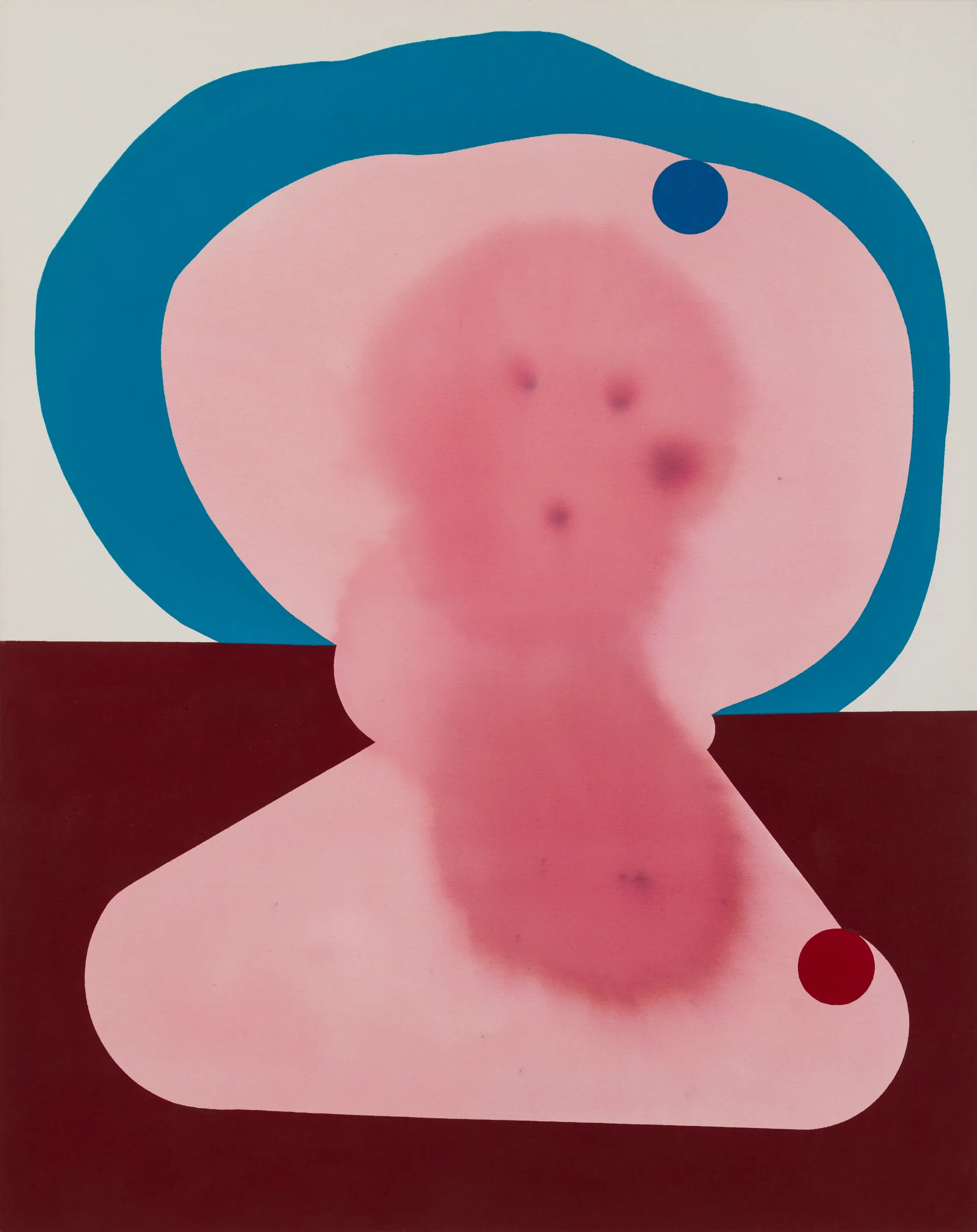
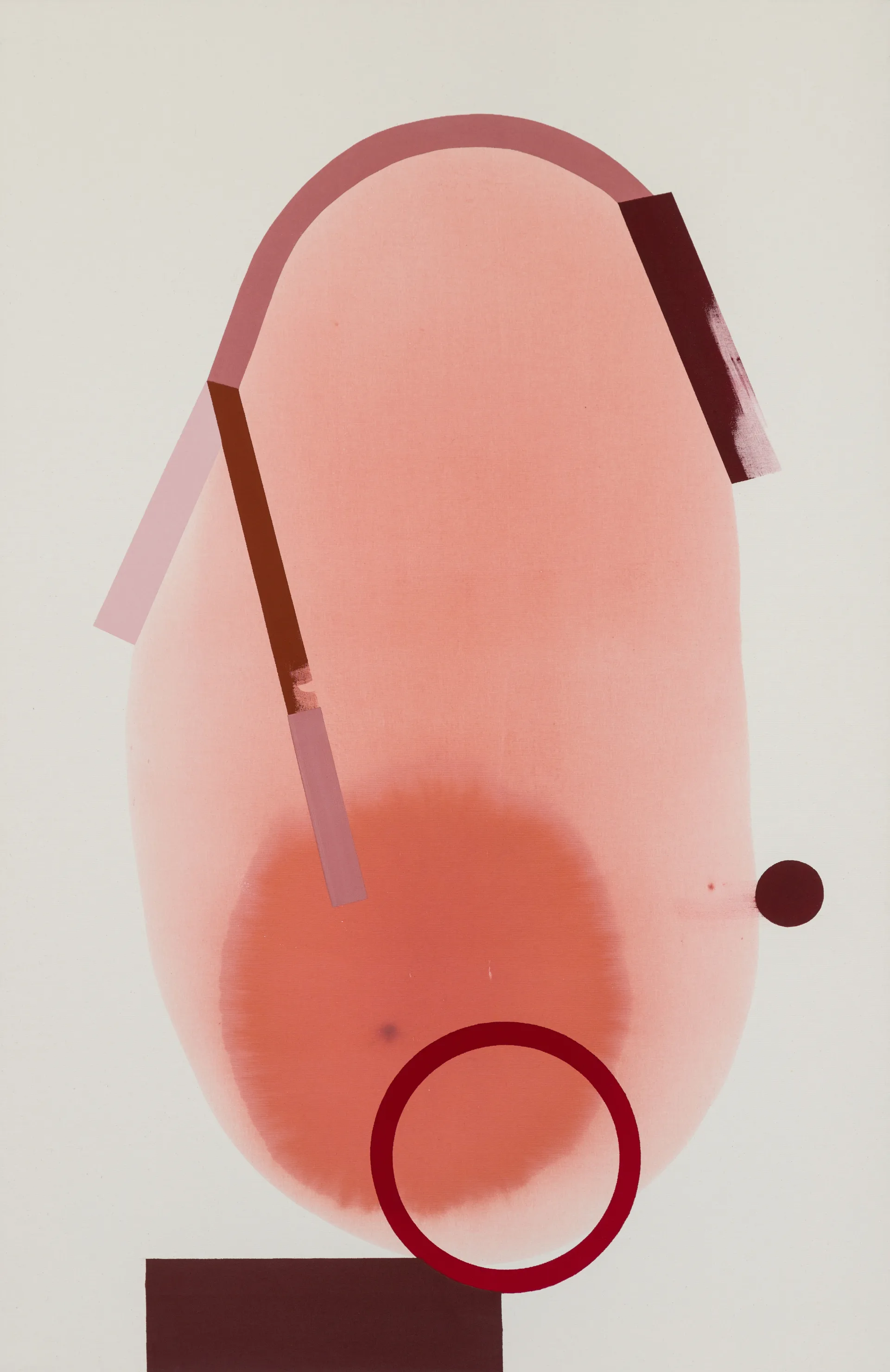
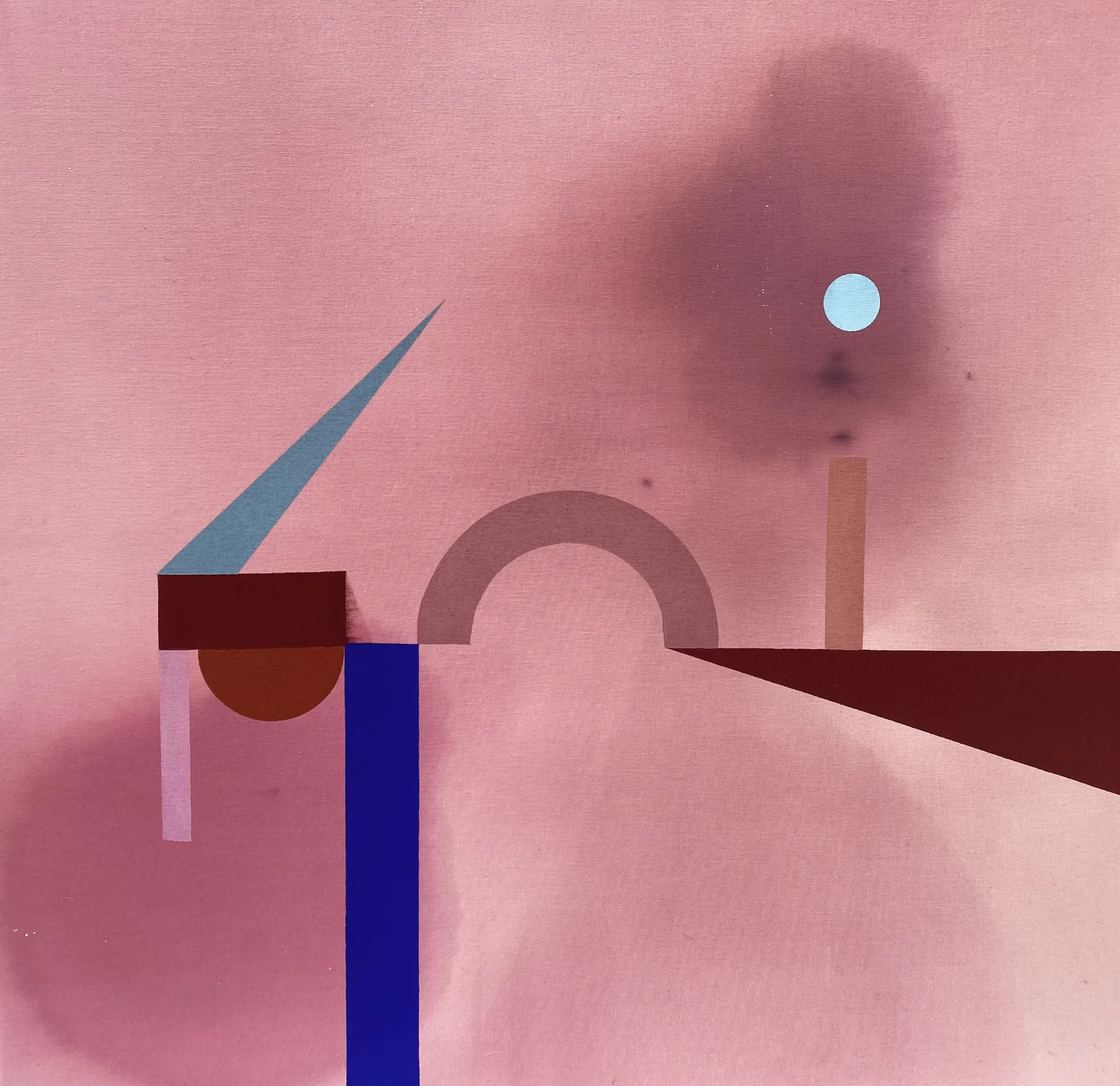
The project focuses on four specific works by the artist: Sense of Safety, In the Water, Warmth of the Earth, and Calming Composition, View of Stralsund.
Basia Bańda - a visual artist born in Zielona Góra.
Between 2001 and 2006, she studied at the Faculty of Painting at the University of the Arts in Poznań. In 2018, she obtained a doctoral degree from the Academy of Fine Arts in Katowice. Since 2008, she has been working at the Institute of Visual Arts, Faculty of Art, at the University of Zielona Góra. She collaborates with the Salony Foundation in Zielona Góra.
She lives and works in Zielona Góra. Her works are included in private and public collections, including the Ujazdowski Castle Centre for Contemporary Art in Warsaw, the Lower Silesian Society for the Encouragement of Fine Arts, the ING Polish Art Foundation, and the National Museum in Gdańsk. She has presented her work in Poland and abroad, including at Zachęta - National Gallery of Art (Warsaw), the Centre of Contemporary Art in Toruń, the Polish Sculpture Center in Orońsko, MOCAK in Kraków, and Labirynt Gallery in Lublin.
Basia Bańda’s artistic practice as a starting point
The starting point of the project DO THE WORK! is the artistic practice of Basia Bańda, which becomes an impulse for embodied engagement with art through movement, emotion, and the senses. Her abstract paintings are not treated as static objects, but as living experiences that activate specific tensions, rhythms, and gestures in the body before they are named in words.
As Ryszard Woźniak observes, the artist’s work can be understood as “an affirmation of all aspects of existence.” The energy of the psychological states she experiences becomes material for constructing compositions that describe emotions and conditions shared by all of us. Bańda remains faithful to her own sensitivity and to what Woźniak calls “the only available truth - the truth of personal sensations and experiences.” This resonates with the idea of the project, which invites each viewer to search for their own authentic response within the painting.
A key element of this painterly narrative is the color pink - described by Ewa Łączyńska as a intimate and safe body color. In the DO THE WORK! project, this sense of corporeality becomes a starting point for exploring closeness and grounding. The synesthetic quality present in Bańda’s paintings, as described by Marta Lisak, finds a direct translation into movement - vision intertwines with touch, and color becomes a kinesthetic impulse, inviting us to “look with the whole body.”
The project focuses on four specific works by the artist: Sense of Safety, In the Water, Warmth of the Earth, and Calming Composition, View of Stralsund.
Basia Bańda - a visual artist born in Zielona Góra.
Between 2001 and 2006, she studied at the Faculty of Painting at the University of the Arts in Poznań. In 2018, she obtained a doctoral degree from the Academy of Fine Arts in Katowice. Since 2008, she has been working at the Institute of Visual Arts, Faculty of Art, at the University of Zielona Góra. She collaborates with the Salony Foundation in Zielona Góra.
She lives and works in Zielona Góra. Her works are included in private and public collections, including the Ujazdowski Castle Centre for Contemporary Art in Warsaw, the Lower Silesian Society for the Encouragement of Fine Arts, the ING Polish Art Foundation, and the National Museum in Gdańsk. She has presented her work in Poland and abroad, including at Zachęta - National Gallery of Art (Warsaw), the Centre of Contemporary Art in Toruń, the Polish Sculpture Center in Orońsko, MOCAK in Kraków, and Labirynt Gallery in Lublin.
05
Paintings and films:
06
Summary
Four paintings and four films create a pathway of experiences: relationship, immersion, grounding, and orientation in space. Each of them shows that an image can become a starting point for movement, and movement - a way of understanding.
The work of the important Polish contemporary artist Basia Bańda becomes here a space of encounter. Her paintings are not discussed or interpreted directly - they become an impulse for personal response and for noticing what appears in the body.
The project proposes a contemporary, embodied form of contact with art - one in which the viewer does not remain a distant observer but becomes a participant in the experience. It is a dialogue between painting and movement, image and gesture.
Such an approach aligns with the idea of aesthetic education based on freedom and creative activity, as described by Robert Gloton and Claude Clero - creating space for independent experience rather than transmitting ready-made meanings.
The proposed activities can be explored as a whole or in parts - in a gallery, at home, or in a workshop setting. They can be adapted, expanded, and modified according to age and context.
I encourage you to treat this publication not as an instruction, but as an invitation - to move, to pause, to be together, and to explore how images can live within the body.
Summary
Four paintings and four films create a pathway of experiences: relationship, immersion, grounding, and orientation in space. Each of them shows that an image can become a starting point for movement, and movement - a way of understanding.
The work of the important Polish contemporary artist Basia Bańda becomes here a space of encounter. Her paintings are not discussed or interpreted directly - they become an impulse for personal response and for noticing what appears in the body.
The project proposes a contemporary, embodied form of contact with art - one in which the viewer does not remain a distant observer but becomes a participant in the experience. It is a dialogue between painting and movement, image and gesture.
Such an approach aligns with the idea of aesthetic education based on freedom and creative activity, as described by Robert Gloton and Claude Clero - creating space for independent experience rather than transmitting ready-made meanings.
The proposed activities can be explored as a whole or in parts - in a gallery, at home, or in a workshop setting. They can be adapted, expanded, and modified according to age and context.
I encourage you to treat this publication not as an instruction, but as an invitation - to move, to pause, to be together, and to explore how images can live within the body.
07
Project author
Kinga Górska - dance educator, choreographer, and arts organiser. She graduated in Arts Management in Zielona Góra.
In her work, she combines movement, performative practices, and arts education, exploring connections between dance and other fields of art. She leads movement-based, artistic, and sensory workshops for children, young people, and adults.
She has co-created choreography and stage movement for productions at the Lubuski Theatre in Zielona Góra and initiated educational and artistic projects, including Laboratorium Twórcze. In 2017, she taught classes in movement for theatre at the University of Zielona Góra.
The project DO THE WORK! grows out of her practice of working with the body and from shared visits to galleries and museums with her two children - a search for ways to enliven encounters with painting through movement and relationship.
Since 2023, she has co-created the Oppa! collective, and since 2024, she has led her own initiatives under the name Hoppa.
Project author
Kinga Górska - dance educator, choreographer, and arts organiser. She graduated in Arts Management in Zielona Góra.
In her work, she combines movement, performative practices, and arts education, exploring connections between dance and other fields of art. She leads movement-based, artistic, and sensory workshops for children, young people, and adults.
She has co-created choreography and stage movement for productions at the Lubuski Theatre in Zielona Góra and initiated educational and artistic projects, including Laboratorium Twórcze. In 2017, she taught classes in movement for theatre at the University of Zielona Góra.
The project DO THE WORK! grows out of her practice of working with the body and from shared visits to galleries and museums with her two children - a search for ways to enliven encounters with painting through movement and relationship.
Since 2023, she has co-created the Oppa! collective, and since 2024, she has led her own initiatives under the name Hoppa.
This publication was created as part of a scholarship project financed under the National Recovery and Resilience Plan (KPO for Culture), component Investment A2.5.1 – Programme for Supporting Activities of Cultural Sector and Creative Industries Entities. The project is co-financed by the European Union under the NextGenerationEU Recovery and Resilience Facility.


