← Back
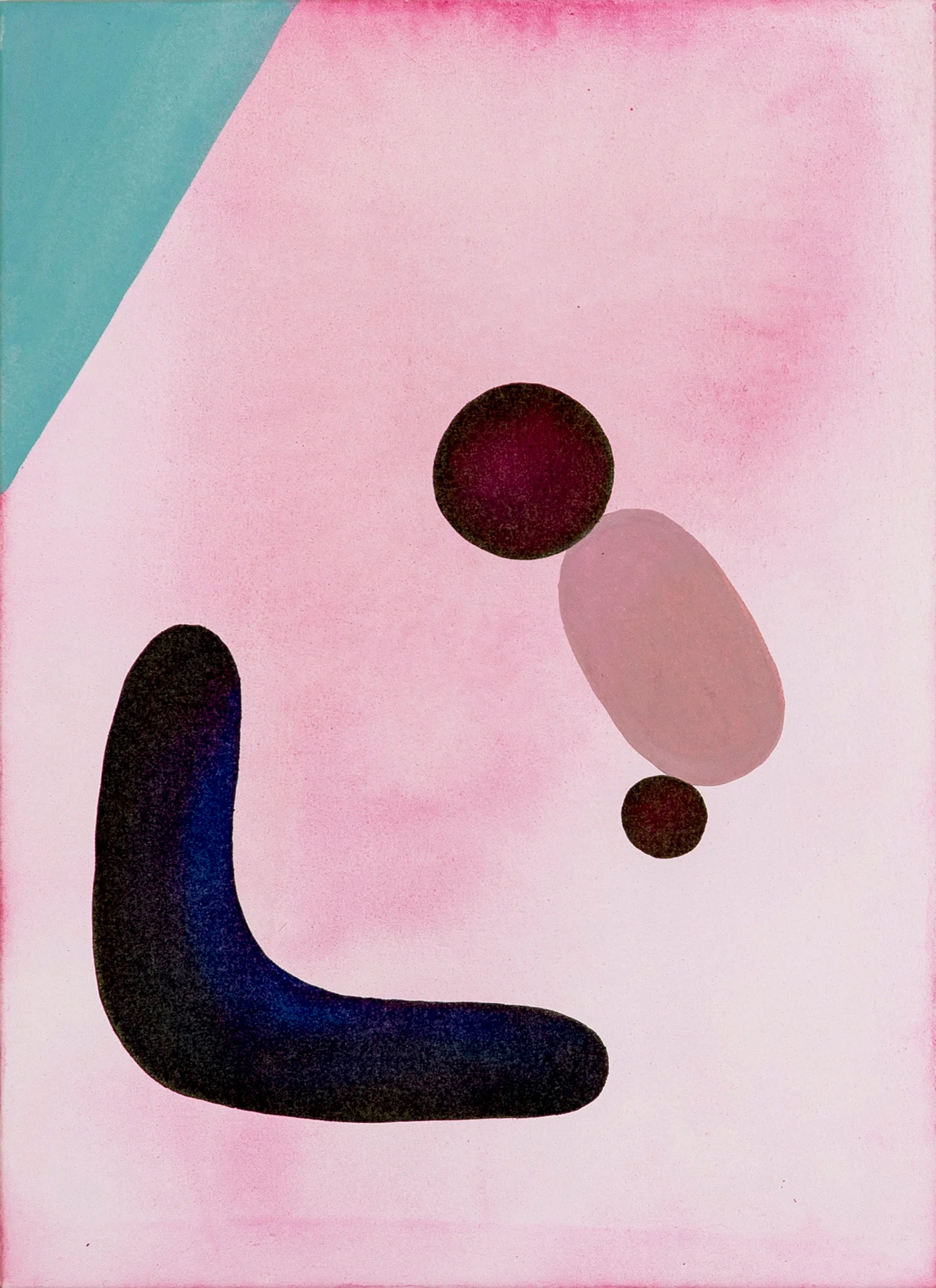
Sense of Safety
Basia Bańda
ecoline on canvas
70 × 50 cm, 2019
Film
Description of the painting
We feel safe when someone stands beside us - when we can lean on their shoulder, hold their hand, or be embraced.
Looking at this painting, I also think of a trampoline - when the body lifts high into the air and then lands softly on a safe surface. Afterwards, it curls up and rests.
Marta Gendera
Questions about the painting
If this painting could move, how would it move?
If you could step inside the painting, where would you hide?
Choose your group ↓
Alone
(children/individual, approx. 6-7 years old)
Movement
cocoon
Lie down on the floor or on a mat.
Curl up like a small ball, a snail, or a soft stone.
Hold your knees close to your chest.
Breathe slowly.
Notice which position feels most comfortable.
You may stay there as long as you like.
Observe how your body changes:
when you inhale, it gently opens,
when you exhale, it curls again.
my safety gesture
Find a movement or gesture that makes you feel good and safe.
It could be:
hugging yourself,
gently rocking,
sitting cross-legged.
Repeat this movement several times.
It can become your personal safety gesture.
You can return to it whenever you need.
After the movement
Pause for a moment.
Notice your breath.
What stayed in your body?
Senses
what kind of “skin” does my body like?
Touch different materials:soft, rough, smooth, warm, or cool(for example: fabric, felt, wool, faux fur, rubber, foil).
You may close your eyes for a moment.
Notice:
what feels calming,
what feels unpleasant,
what gives you a sense of protection.
Choose one material.
Move as if your skin were made of it.
Image
where in my body do I feel safe?
Use: a sheet of paper, crayons, pastels, or markers.
Draw a simple human figure.
Color the parts of the body where you feel calm, warmth, or support.
Choose one area and show it through movement.
Alone
(children/individual, approx. 6-7 years old)
Movement
cocoon
Lie down on the floor or on a mat.
Curl up like a small ball, a snail, or a soft stone.
Hold your knees close to your chest.
Breathe slowly.
Notice which position feels most comfortable.
You may stay there as long as you like.
Observe how your body changes:
when you inhale, it gently opens,
when you exhale, it curls again.
my safety gesture
Find a movement or gesture that makes you feel good and safe.
It could be:
hugging yourself,
gently rocking,
sitting cross-legged.
Repeat this movement several times.
It can become your personal safety gesture.
You can return to it whenever you need.
After the movement
Pause for a moment.
Notice your breath.
What stayed in your body?
Senses
what kind of “skin” does my body like?
Touch different materials:soft, rough, smooth, warm, or cool(for example: fabric, felt, wool, faux fur, rubber, foil).
You may close your eyes for a moment.
Notice:
what feels calming,
what feels unpleasant,
what gives you a sense of protection.
Choose one material.
Move as if your skin were made of it.
Image
where in my body do I feel safe?
Use: a sheet of paper, crayons, pastels, or markers.
Draw a simple human figure.
Color the parts of the body where you feel calm, warmth, or support.
Choose one area and show it through movement.
Alone
(children/individual, approx. 6-7 years old)
Movement
cocoon
Lie down on the floor or on a mat.
Curl up like a small ball, a snail, or a soft stone.
Hold your knees close to your chest.
Breathe slowly.
Notice which position feels most comfortable.
You may stay there as long as you like.
Observe how your body changes:
when you inhale, it gently opens,
when you exhale, it curls again.
my safety gesture
Find a movement or gesture that makes you feel good and safe.
It could be:
hugging yourself,
gently rocking,
sitting cross-legged.
Repeat this movement several times.
It can become your personal safety gesture.
You can return to it whenever you need.
After the movement
Pause for a moment.
Notice your breath.
What stayed in your body?
Senses
what kind of “skin” does my body like?
Touch different materials:soft, rough, smooth, warm, or cool(for example: fabric, felt, wool, faux fur, rubber, foil).
You may close your eyes for a moment.
Notice:
what feels calming,
what feels unpleasant,
what gives you a sense of protection.
Choose one material.
Move as if your skin were made of it.
Image
where in my body do I feel safe?
Use: a sheet of paper, crayons, pastels, or markers.
Draw a simple human figure.
Color the parts of the body where you feel calm, warmth, or support.
Choose one area and show it through movement.
Together
(family/caregiver + child aged 4-6)
Movement
shared breathing
Sit or lie down close to each other.
One person gently leans against the other - back to back, shoulder to shoulder, or head resting softly.
Try to breathe at the same pace.
You do not need to speak.Just stay close.
body as shelter
One person creates a “shelter” with their body - like a wall, a roof, or a cocoon.
The other person explores the space inside it - leaning, curling, changing position.
Notice which shape feels most protective.
Then switch roles.
After the movement
Look at each other.
Do you feel closer or the same?
When did it feel good in your bodies?
Senses
warmth - weight - closeness
Sit together and explore different kinds of contact:
back to back,
shoulder to shoulder,
a hand resting gently on the back or arm.
Notice:
which parts of the body enjoy touch,
what level of pressure feels comfortable,
when the body begins to relax.
You may add a soft blanket or cushion as an extra “layer of protection.”
Image
shared map of safety
Use: a large sheet of paper, crayons, pastels, or paint.
Trace each other’s body outlines on the paper.
Color the areas associated with safety, warmth, and closeness.
You may use the same colors or different ones - notice where your marks meet.
At the end, choose one area and express it together through a shared movement.
Together
(family/caregiver + child aged 4-6)
Movement
shared breathing
Sit or lie down close to each other.
One person gently leans against the other - back to back, shoulder to shoulder, or head resting softly.
Try to breathe at the same pace.
You do not need to speak.Just stay close.
body as shelter
One person creates a “shelter” with their body - like a wall, a roof, or a cocoon.
The other person explores the space inside it - leaning, curling, changing position.
Notice which shape feels most protective.
Then switch roles.
After the movement
Look at each other.
Do you feel closer or the same?
When did it feel good in your bodies?
Senses
warmth - weight - closeness
Sit together and explore different kinds of contact:
back to back,
shoulder to shoulder,
a hand resting gently on the back or arm.
Notice:
which parts of the body enjoy touch,
what level of pressure feels comfortable,
when the body begins to relax.
You may add a soft blanket or cushion as an extra “layer of protection.”
Image
shared map of safety
Use: a large sheet of paper, crayons, pastels, or paint.
Trace each other’s body outlines on the paper.
Color the areas associated with safety, warmth, and closeness.
You may use the same colors or different ones - notice where your marks meet.
At the end, choose one area and express it together through a shared movement.
Together
(family/caregiver + child aged 4-6)
Movement
shared breathing
Sit or lie down close to each other.
One person gently leans against the other - back to back, shoulder to shoulder, or head resting softly.
Try to breathe at the same pace.
You do not need to speak.Just stay close.
body as shelter
One person creates a “shelter” with their body - like a wall, a roof, or a cocoon.
The other person explores the space inside it - leaning, curling, changing position.
Notice which shape feels most protective.
Then switch roles.
After the movement
Look at each other.
Do you feel closer or the same?
When did it feel good in your bodies?
Senses
warmth - weight - closeness
Sit together and explore different kinds of contact:
back to back,
shoulder to shoulder,
a hand resting gently on the back or arm.
Notice:
which parts of the body enjoy touch,
what level of pressure feels comfortable,
when the body begins to relax.
You may add a soft blanket or cushion as an extra “layer of protection.”
Image
shared map of safety
Use: a large sheet of paper, crayons, pastels, or paint.
Trace each other’s body outlines on the paper.
Color the areas associated with safety, warmth, and closeness.
You may use the same colors or different ones - notice where your marks meet.
At the end, choose one area and express it together through a shared movement.
In a group
(educational activities/workshops for children aged 7-11)
Movement
breath and supprot
Invite participants to find a comfortable curled position on the floor. Guide their attention to the breath:
- with each inhale, the body expands,
- with each exhale, it contracts.
Then propose working in pairs: one person becomes “support,” the other gently leans. After a moment, switch roles.
After the movement
You may remain still for a moment.Notice your breath. Notice what stayed in your body.
Which gestures created a sense of safety? In which position did the body feel most secure?
Where in your body does calm live?
Is it easier to feel safe alone or in a group?Was it easier to give support or to receive it?
Guide to the experience - how to “respond” to the questions
Question: Where in your body does calm live?
Response: It does not have to be verbal. It may appear as a moment of relaxation, a deeper breath, or finding a comfortable “cocoon” position on the floor.
Question: Is it easier to feel safe alone or together?
Response: It is about noticing whether the body prefers “isolation” in a curled position or needs physical support from another person.
Senses
safe distance
Participants move freely around the room.
They stop when they feel comfortable in relation to others.
They explore:
- how close they can come,
- when the body says, “this is enough.”
The exercise may be repeated with eyes closed (ensuring safety).
Variation: One person is silently chosen as the one you would like to be closest to. Move within the group while trying to remain at the closest possible distance to that person.
Image
color of calm
Use: sheets of paper, oil pastels, or paint.
Each person chooses one color associated with a sense of safety.
On the paper, they create a simple form (a shape, a line, or a circle).
The focus is not on creating an image, but on leaving a trace of the experience.
At the end, invite participants to respond with a short movement inspired by the shape or color. The group moves among the drawings - participants pause by a chosen drawing and interpret it through movement.
In a group
(educational activities/workshops for children aged 7-11)
Movement
breath and supprot
Invite participants to find a comfortable curled position on the floor. Guide their attention to the breath:
- with each inhale, the body expands,
- with each exhale, it contracts.
Then propose working in pairs: one person becomes “support,” the other gently leans. After a moment, switch roles.
After the movement
You may remain still for a moment.Notice your breath. Notice what stayed in your body.
Which gestures created a sense of safety? In which position did the body feel most secure?
Where in your body does calm live?
Is it easier to feel safe alone or in a group?Was it easier to give support or to receive it?
Guide to the experience - how to “respond” to the questions
Question: Where in your body does calm live?
Response: It does not have to be verbal. It may appear as a moment of relaxation, a deeper breath, or finding a comfortable “cocoon” position on the floor.
Question: Is it easier to feel safe alone or together?
Response: It is about noticing whether the body prefers “isolation” in a curled position or needs physical support from another person.
Senses
safe distance
Participants move freely around the room.
They stop when they feel comfortable in relation to others.
They explore:
- how close they can come,
- when the body says, “this is enough.”
The exercise may be repeated with eyes closed (ensuring safety).
Variation: One person is silently chosen as the one you would like to be closest to. Move within the group while trying to remain at the closest possible distance to that person.
Image
color of calm
Use: sheets of paper, oil pastels, or paint.
Each person chooses one color associated with a sense of safety.
On the paper, they create a simple form (a shape, a line, or a circle).
The focus is not on creating an image, but on leaving a trace of the experience.
At the end, invite participants to respond with a short movement inspired by the shape or color. The group moves among the drawings - participants pause by a chosen drawing and interpret it through movement.
In a group
(educational activities/workshops for children aged 7-11)
Movement
breath and supprot
Invite participants to find a comfortable curled position on the floor. Guide their attention to the breath:
- with each inhale, the body expands,
- with each exhale, it contracts.
Then propose working in pairs: one person becomes “support,” the other gently leans. After a moment, switch roles.
After the movement
You may remain still for a moment.Notice your breath. Notice what stayed in your body.
Which gestures created a sense of safety? In which position did the body feel most secure?
Where in your body does calm live?
Is it easier to feel safe alone or in a group?Was it easier to give support or to receive it?
Guide to the experience - how to “respond” to the questions
Question: Where in your body does calm live?
Response: It does not have to be verbal. It may appear as a moment of relaxation, a deeper breath, or finding a comfortable “cocoon” position on the floor.
Question: Is it easier to feel safe alone or together?
Response: It is about noticing whether the body prefers “isolation” in a curled position or needs physical support from another person.
Senses
safe distance
Participants move freely around the room.
They stop when they feel comfortable in relation to others.
They explore:
- how close they can come,
- when the body says, “this is enough.”
The exercise may be repeated with eyes closed (ensuring safety).
Variation: One person is silently chosen as the one you would like to be closest to. Move within the group while trying to remain at the closest possible distance to that person.
Image
color of calm
Use: sheets of paper, oil pastels, or paint.
Each person chooses one color associated with a sense of safety.
On the paper, they create a simple form (a shape, a line, or a circle).
The focus is not on creating an image, but on leaving a trace of the experience.
At the end, invite participants to respond with a short movement inspired by the shape or color. The group moves among the drawings - participants pause by a chosen drawing and interpret it through movement.