← Back
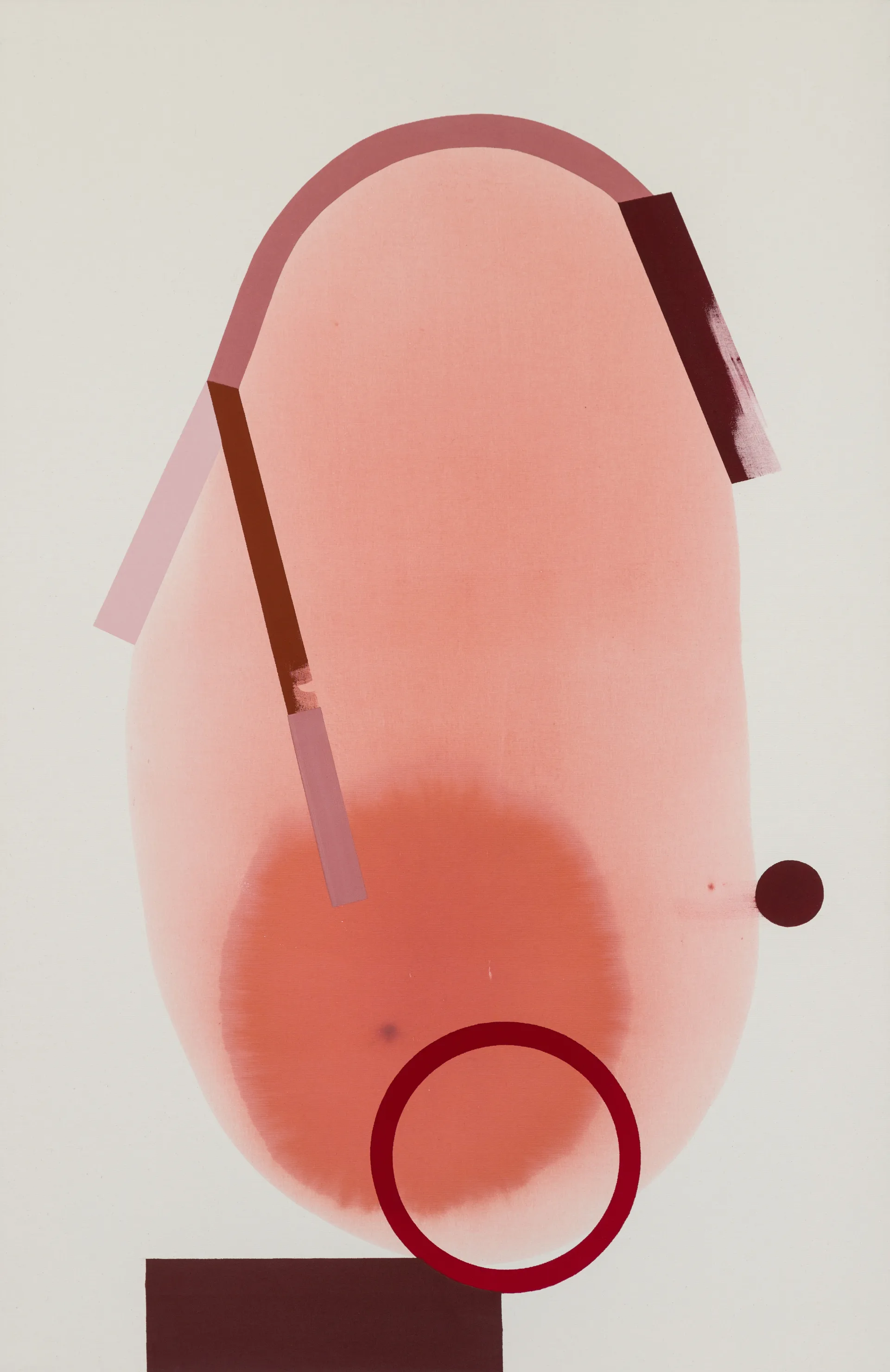
Warmth of the Earth
Basia Bańda
ecoline and acrylic on canvas
140 × 90 cm, 2022
Film
Description of the painting
You probably know that deep inside our planet there is a hot core, glowing red. Imagine how it releases heat from within, how lava flows beneath the Earth’s crust, setting stones and rocks in motion.
In this painting, the artist uses a flesh-toned palette that reminds us of the relationship between the human body and the earth.
Marta Gendera
Questions about the painting
Does the warmth coming from this painting burn, or does it gently warm your inner body?
If this painting had a voice, would it be a low rumble of the earth or the rustling of dry grass?
Choose your group ↓
Alone
(children/individual, approx. 6-7 years old)
Movement
earth under your feet
Stand barefoot.
Slowly shift your weight downward, as if your feet were sinking into soft earth.
Try a few variations:
a heavy, slow step,
pressing your heels or toes into the ground,
gently swaying your hips.
Notice when your body feels stable.
warmth from within - breath and movement
Place your hands on your belly or on your chest.
With each inhale, imagine that warmth from the earth enters your body.
With each exhale, release tension downward.
Let this warmth guide the movement of your chest, pelvis, and hands.
After the movement
Pause for a moment.
Notice your breath.
What stayed in your body?
Senses
touch of the earth
Touch natural materials:
soil or clay (it may be dry),
stones,
bark,
leaves,
dry grass.
Slide your hands over their surfaces.
Close your eyes and notice the temperature, hardness, and roughness.
Then try to move as if your body had the same texture.
Image
the soil of my body
Use: a large sheet of paper, soil, natural pigments, coffee, cinnamon, or brown oil pastels, and water. You may paint with your fingers.
Paint your inner soil: is it dry, heavy, soft, fertile?
Choose one quality and try to express it through movement.
Alone
(children/individual, approx. 6-7 years old)
Movement
earth under your feet
Stand barefoot.
Slowly shift your weight downward, as if your feet were sinking into soft earth.
Try a few variations:
a heavy, slow step,
pressing your heels or toes into the ground,
gently swaying your hips.
Notice when your body feels stable.
warmth from within - breath and movement
Place your hands on your belly or on your chest.
With each inhale, imagine that warmth from the earth enters your body.
With each exhale, release tension downward.
Let this warmth guide the movement of your chest, pelvis, and hands.
After the movement
Pause for a moment.
Notice your breath.
What stayed in your body?
Senses
touch of the earth
Touch natural materials:
soil or clay (it may be dry),
stones,
bark,
leaves,
dry grass.
Slide your hands over their surfaces.
Close your eyes and notice the temperature, hardness, and roughness.
Then try to move as if your body had the same texture.
Image
the soil of my body
Use: a large sheet of paper, soil, natural pigments, coffee, cinnamon, or brown oil pastels, and water. You may paint with your fingers.
Paint your inner soil: is it dry, heavy, soft, fertile?
Choose one quality and try to express it through movement.
Alone
(children/individual, approx. 6-7 years old)
Movement
earth under your feet
Stand barefoot.
Slowly shift your weight downward, as if your feet were sinking into soft earth.
Try a few variations:
a heavy, slow step,
pressing your heels or toes into the ground,
gently swaying your hips.
Notice when your body feels stable.
warmth from within - breath and movement
Place your hands on your belly or on your chest.
With each inhale, imagine that warmth from the earth enters your body.
With each exhale, release tension downward.
Let this warmth guide the movement of your chest, pelvis, and hands.
After the movement
Pause for a moment.
Notice your breath.
What stayed in your body?
Senses
touch of the earth
Touch natural materials:
soil or clay (it may be dry),
stones,
bark,
leaves,
dry grass.
Slide your hands over their surfaces.
Close your eyes and notice the temperature, hardness, and roughness.
Then try to move as if your body had the same texture.
Image
the soil of my body
Use: a large sheet of paper, soil, natural pigments, coffee, cinnamon, or brown oil pastels, and water. You may paint with your fingers.
Paint your inner soil: is it dry, heavy, soft, fertile?
Choose one quality and try to express it through movement.
Together
(family/caregiver + child aged 4-6)
Movement
grounding together
Stand next to each other, with your feet on the floor.
Feel the weight of your body.
Slowly bend your knees and straighten them again.
Breathe calmly.
If you wish:
lean against each other back to back,
notice how your sense of stability changes.
After the movement
Look at each other.
Do you feel closer or the same?
When did it feel good in your bodies?
Senses
warmth - cold
Use:
a warmed seed or rice bag,
a cold stone or a metal object.
Place them gently on different parts of the body, one at a time.
Observe the reactions:
which areas enjoy warmth,
which ask for coolness,
where the body relaxes and where it responds with tension.
You may stay for a moment with the temperature that feels right.
Image
shared soil
Use: a large sheet of paper, soil, natural pigments, coffee, cinnamon, or brown oil pastels, and water. You may paint with your fingers.
On one sheet of paper, create a shared surface of earth.
Notice where your marks meet.
Choose one place and try to express it through movement.
Together
(family/caregiver + child aged 4-6)
Movement
grounding together
Stand next to each other, with your feet on the floor.
Feel the weight of your body.
Slowly bend your knees and straighten them again.
Breathe calmly.
If you wish:
lean against each other back to back,
notice how your sense of stability changes.
After the movement
Look at each other.
Do you feel closer or the same?
When did it feel good in your bodies?
Senses
warmth - cold
Use:
a warmed seed or rice bag,
a cold stone or a metal object.
Place them gently on different parts of the body, one at a time.
Observe the reactions:
which areas enjoy warmth,
which ask for coolness,
where the body relaxes and where it responds with tension.
You may stay for a moment with the temperature that feels right.
Image
shared soil
Use: a large sheet of paper, soil, natural pigments, coffee, cinnamon, or brown oil pastels, and water. You may paint with your fingers.
On one sheet of paper, create a shared surface of earth.
Notice where your marks meet.
Choose one place and try to express it through movement.
Together
(family/caregiver + child aged 4-6)
Movement
grounding together
Stand next to each other, with your feet on the floor.
Feel the weight of your body.
Slowly bend your knees and straighten them again.
Breathe calmly.
If you wish:
lean against each other back to back,
notice how your sense of stability changes.
After the movement
Look at each other.
Do you feel closer or the same?
When did it feel good in your bodies?
Senses
warmth - cold
Use:
a warmed seed or rice bag,
a cold stone or a metal object.
Place them gently on different parts of the body, one at a time.
Observe the reactions:
which areas enjoy warmth,
which ask for coolness,
where the body relaxes and where it responds with tension.
You may stay for a moment with the temperature that feels right.
Image
shared soil
Use: a large sheet of paper, soil, natural pigments, coffee, cinnamon, or brown oil pastels, and water. You may paint with your fingers.
On one sheet of paper, create a shared surface of earth.
Notice where your marks meet.
Choose one place and try to express it through movement.
In a group
(educational activities/workshops for children aged 7-11)
Movement
Invite participants to stand freely in the space.
At first, they move very lightly - as if walking on soft, fluffy earth.
Then change the quality of the ground: the earth becomes heavy, dense, warm.
The step slows down. The body lowers.
Next, invite them to find one movement that gives a sense of stability.It might be:
a heavy step,
a pause,
bending the knees,
hands placed on the belly.
Repeat this movement several times.
At the end, invite everyone to arrive in their chosen position at the same moment.
Remain in silence for a while.
After the movement
You may remain still for a moment.
Notice your breath. Notice what stayed in your body.
What quality of earth do you need right now: soft, fertile, stable?
Which movement gives you a sense of “returning to yourself”?
Guide to the experience - how to "respond" to the questions:
Question: What quality of earth you need right now?
Response: It is reflected in the weight of the step. If a child steps firmly, they may be seeking stability; if they step lightly, they may be looking for softness and lightness.
Question: Do you see silence in the painting Which movement gives you sense of "returning to yourself"?
Response: It is the moment when the participant stops experimenting and settles into the chosen position that feels most comfortable.
Senses
pulse of the earth
Participants stand in a circle, with their feet slightly apart.
One person begins to gently tap their foot on the floor - like the heartbeat of the earth.
The rhythm moves through the group.
Gradually, it becomes shared.
The foot tap may be joined by movement of the arms and the whole body.
The movement follows the impulse coming from the floor.
If a voice appears - allow it to resonate.
Notice:
does the rhythm add energy,
or does it calm you?
Image
color of the earth
Use: a very large sheet of paper, oil pastels, natural pigments, turmeric, coffee, etc.
Together, paint successive layers of earth.
You may paint from bottom to top - ike a cross-section of the soil.
The layers can be:
thin or thick,
light or dark,
calm or uneven.
Pause and look at how many layers have been created.
Each person chooses one layer.
At a signal, everyone moves at the same time, expressing their chosen layer through movement: heavy, loose, compact, or cracking.
After a moment, stop together.
In a group
(educational activities/workshops for children aged 7-11)
Movement
Invite participants to stand freely in the space.
At first, they move very lightly - as if walking on soft, fluffy earth.
Then change the quality of the ground: the earth becomes heavy, dense, warm.
The step slows down. The body lowers.
Next, invite them to find one movement that gives a sense of stability.It might be:
a heavy step,
a pause,
bending the knees,
hands placed on the belly.
Repeat this movement several times.
At the end, invite everyone to arrive in their chosen position at the same moment.
Remain in silence for a while.
After the movement
You may remain still for a moment.
Notice your breath. Notice what stayed in your body.
What quality of earth do you need right now: soft, fertile, stable?
Which movement gives you a sense of “returning to yourself”?
Guide to the experience - how to "respond" to the questions:
Question: What quality of earth you need right now?
Response: It is reflected in the weight of the step. If a child steps firmly, they may be seeking stability; if they step lightly, they may be looking for softness and lightness.
Question: Do you see silence in the painting Which movement gives you sense of "returning to yourself"?
Response: It is the moment when the participant stops experimenting and settles into the chosen position that feels most comfortable.
Senses
pulse of the earth
Participants stand in a circle, with their feet slightly apart.
One person begins to gently tap their foot on the floor - like the heartbeat of the earth.
The rhythm moves through the group.
Gradually, it becomes shared.
The foot tap may be joined by movement of the arms and the whole body.
The movement follows the impulse coming from the floor.
If a voice appears - allow it to resonate.
Notice:
does the rhythm add energy,
or does it calm you?
Image
color of the earth
Use: a very large sheet of paper, oil pastels, natural pigments, turmeric, coffee, etc.
Together, paint successive layers of earth.
You may paint from bottom to top - ike a cross-section of the soil.
The layers can be:
thin or thick,
light or dark,
calm or uneven.
Pause and look at how many layers have been created.
Each person chooses one layer.
At a signal, everyone moves at the same time, expressing their chosen layer through movement: heavy, loose, compact, or cracking.
After a moment, stop together.
In a group
(educational activities/workshops for children aged 7-11)
Movement
Invite participants to stand freely in the space.
At first, they move very lightly - as if walking on soft, fluffy earth.
Then change the quality of the ground: the earth becomes heavy, dense, warm.
The step slows down. The body lowers.
Next, invite them to find one movement that gives a sense of stability.It might be:
a heavy step,
a pause,
bending the knees,
hands placed on the belly.
Repeat this movement several times.
At the end, invite everyone to arrive in their chosen position at the same moment.
Remain in silence for a while.
After the movement
You may remain still for a moment.
Notice your breath. Notice what stayed in your body.
What quality of earth do you need right now: soft, fertile, stable?
Which movement gives you a sense of “returning to yourself”?
Guide to the experience - how to "respond" to the questions:
Question: What quality of earth you need right now?
Response: It is reflected in the weight of the step. If a child steps firmly, they may be seeking stability; if they step lightly, they may be looking for softness and lightness.
Question: Do you see silence in the painting Which movement gives you sense of "returning to yourself"?
Response: It is the moment when the participant stops experimenting and settles into the chosen position that feels most comfortable.
Senses
pulse of the earth
Participants stand in a circle, with their feet slightly apart.
One person begins to gently tap their foot on the floor - like the heartbeat of the earth.
The rhythm moves through the group.
Gradually, it becomes shared.
The foot tap may be joined by movement of the arms and the whole body.
The movement follows the impulse coming from the floor.
If a voice appears - allow it to resonate.
Notice:
does the rhythm add energy,
or does it calm you?
Image
color of the earth
Use: a very large sheet of paper, oil pastels, natural pigments, turmeric, coffee, etc.
Together, paint successive layers of earth.
You may paint from bottom to top - ike a cross-section of the soil.
The layers can be:
thin or thick,
light or dark,
calm or uneven.
Pause and look at how many layers have been created.
Each person chooses one layer.
At a signal, everyone moves at the same time, expressing their chosen layer through movement: heavy, loose, compact, or cracking.
After a moment, stop together.